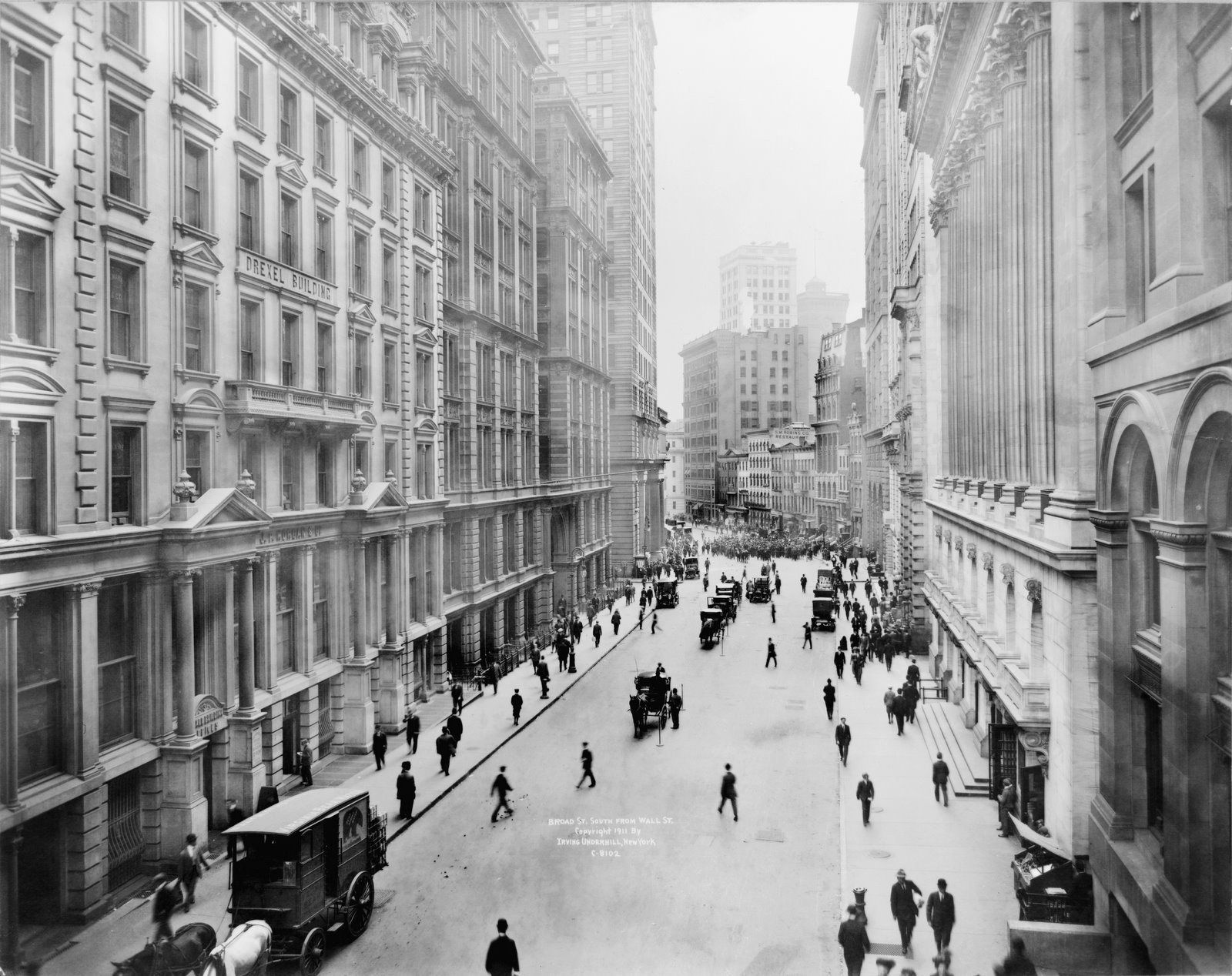
What happenedThe 1929 crashAnd the margin loans nobody could repayCompound 101
What happened
1929 and the margin loans nobody could repay
Shares bought with ten per cent down. When prices fell, the loans were called, the selling fed itself, and the crash became a depression.
· 6 min read · history · leverage · margin
On 3 September 1929 the Dow Jones Industrial Average closed at 381.17, having roughly quadrupled in five years. By 8 July 1932 it was at 41.22, a fall of 89%. It did not close above its 1929 peak again until November 1954. The crash of October 1929 is the most famous market event of the twentieth century, and the story usually told about it is one of mania. The more useful story is about borrowed money: how much of the boom was bought on credit, who lent it, and what happened to the loans when prices fell.
This topic is part of the full library
This one is part of the full library. A free account opens 2 paid reads a month; the plans open the whole shelf and every course chapter.